
In 1973, a burial site in Barangay San Antonio, Oton, gave up something no one expected: a gold death mask. Delicately hammered into two pieces to cover a corpse's eyes and nose. It's not decorative in the way you'd assume. Gold was believed to ward off evil spirits and guide the dead safely into the next life. The mask is one of the most significant archaeological finds in Philippine history, now a National Cultural Treasure kept at the National Museum in Manila. San Antonio was once known by an older name — Katagman.
The mask stays in Manila. The story doesn't. Every year, in the last week of April through May 3 — Oton's Foundation Day — the town brings that history back home through the Katagman Festival. At its center is a dance-drama competition. Teams from Oton's barangays compete to reenact the town's own past. Centuries of trade along the Batiano River, contact with Chinese merchants, and the arrival of Christianity under the Augustinians in 1572. It's not a costume parade. It's the town performing its own memory.
I'll be honest: I didn't know any of this going in. I showed up expecting a street dance competition. Colorful costumes, loud music, the kind of festival energy you find all over the Philippines in April and May. What I didn't expect was that every barangay team in that ampitheater was performing a chapter of the same story. The trade ships. The merchants. The missionaries. Centuries of Oton's history, condensed into a few minutes of choreography, repeated barangay after barangay, each one telling it a little differently.
It changed how I watched the rest of the night. I stopped seeing costumes and floats and started looking for the history inside them.
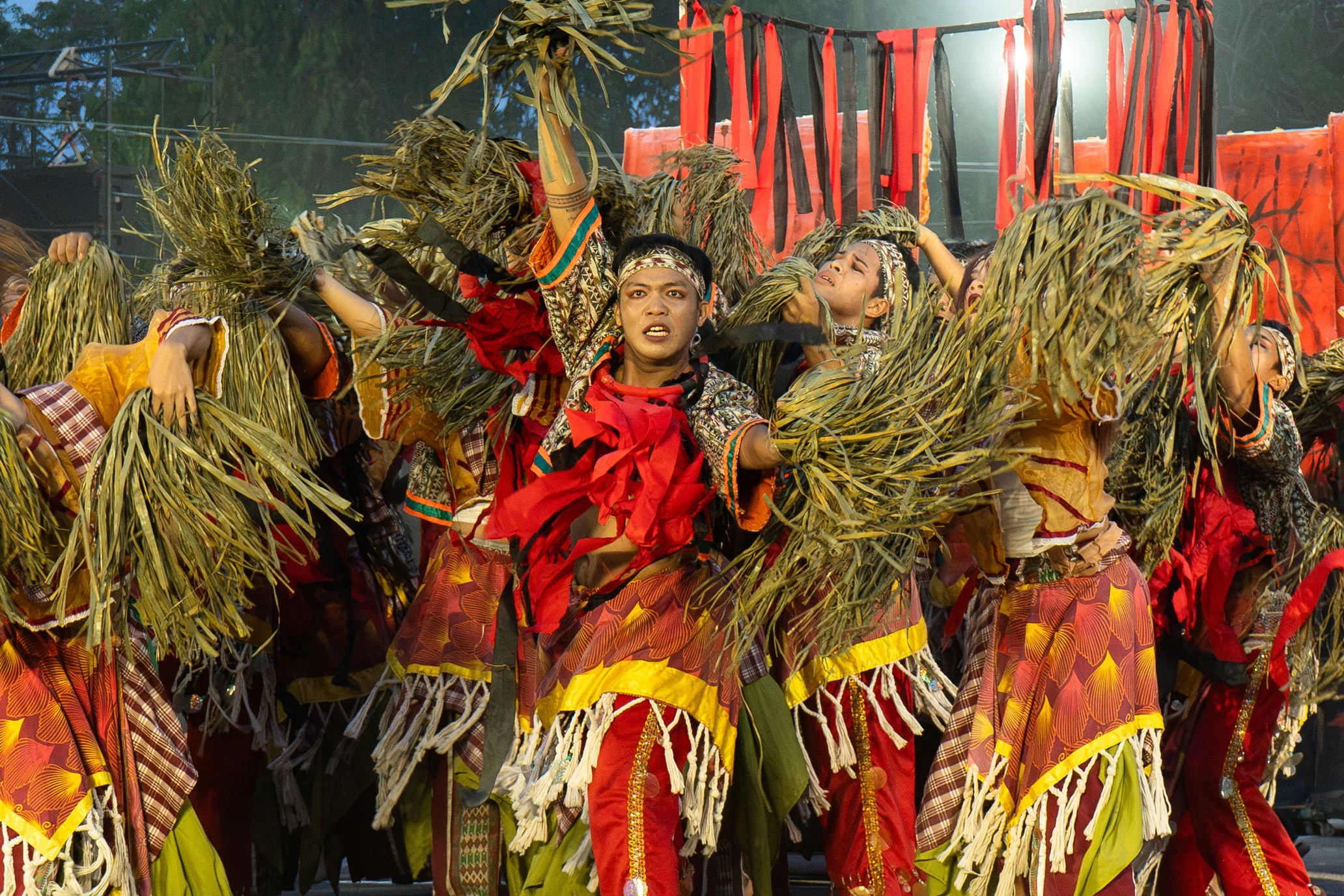
It started with something older and rougher. Dancers in dried grass and raffia costumes, red and gold catching the stage lights like they were still moving even when the dancers paused. There's a rawness to it, something closer to ritual than costume.
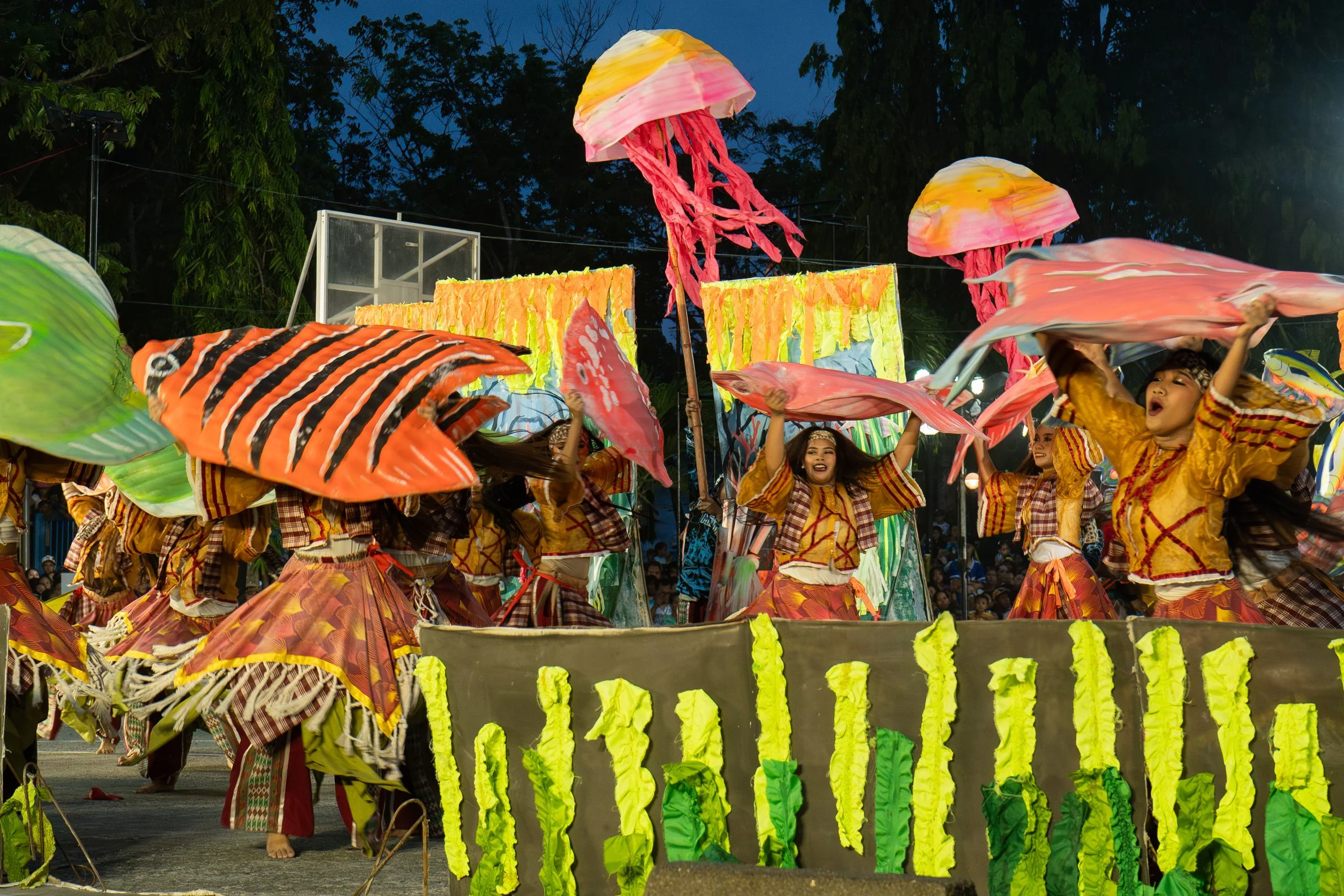
Then the sea arrived — or at least, it felt that way. Oversized jellyfish drifting on poles, a striped fish as long as a person, rows of green plant-like props swaying at the base. It's easy to miss if you don't know the history, but this is the Batiano River section of the story. It’s the port that once connected Oton to Malay traders and Chinese merchants centuries before any of this was called the Philippines. The float wasn't decoration. It was the trade route, staged.
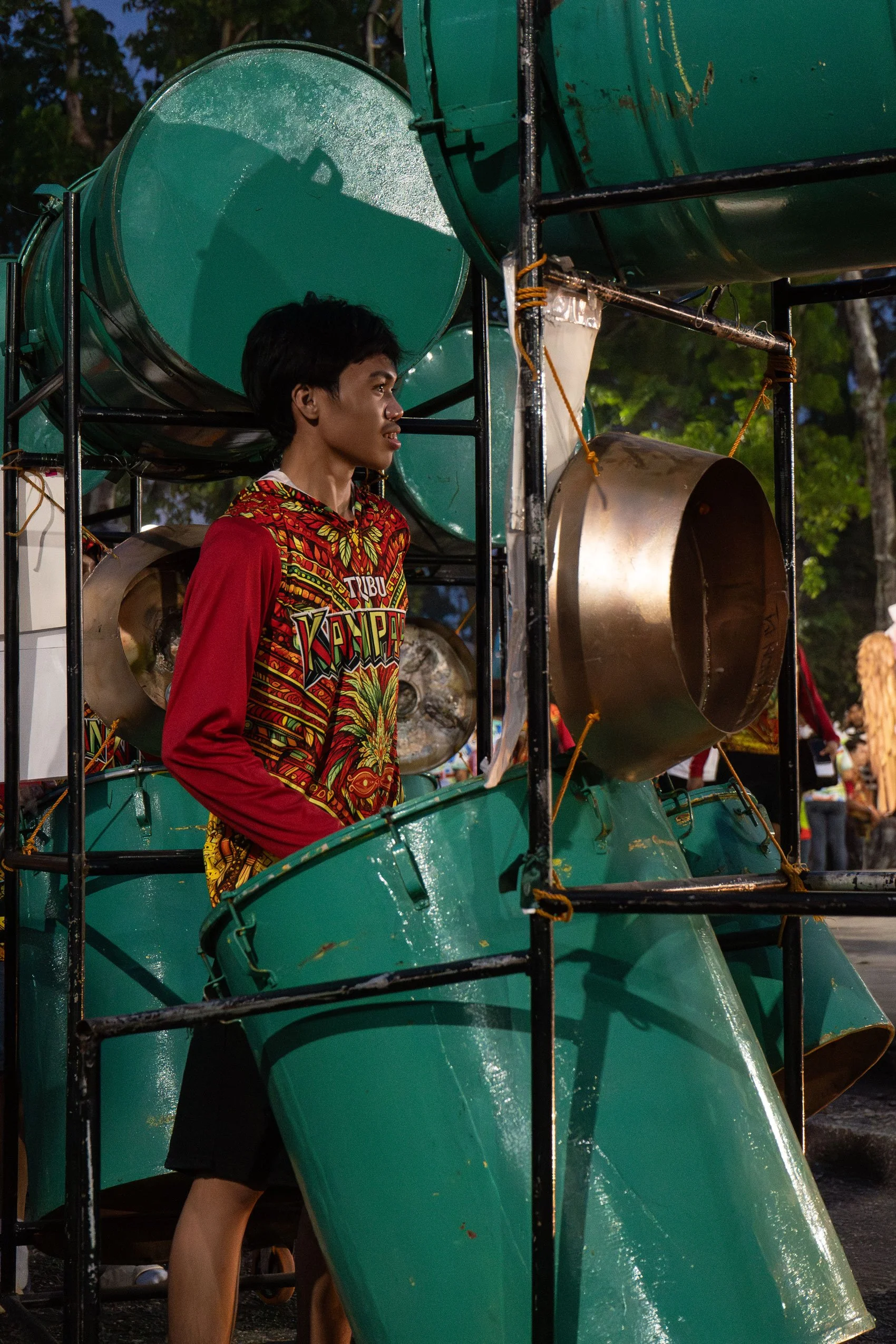
Behind the spectacle, the sound was just as deliberate. One performer stood inside a rig of repurposed metal drums and basins. Real barrels, welded and stacked, not costume-shop percussion. It's a detail easy to walk past in the moment. But it says something about how this festival is put together: barangays building their own instruments, their own floats, their own version of the story, largely by hand.
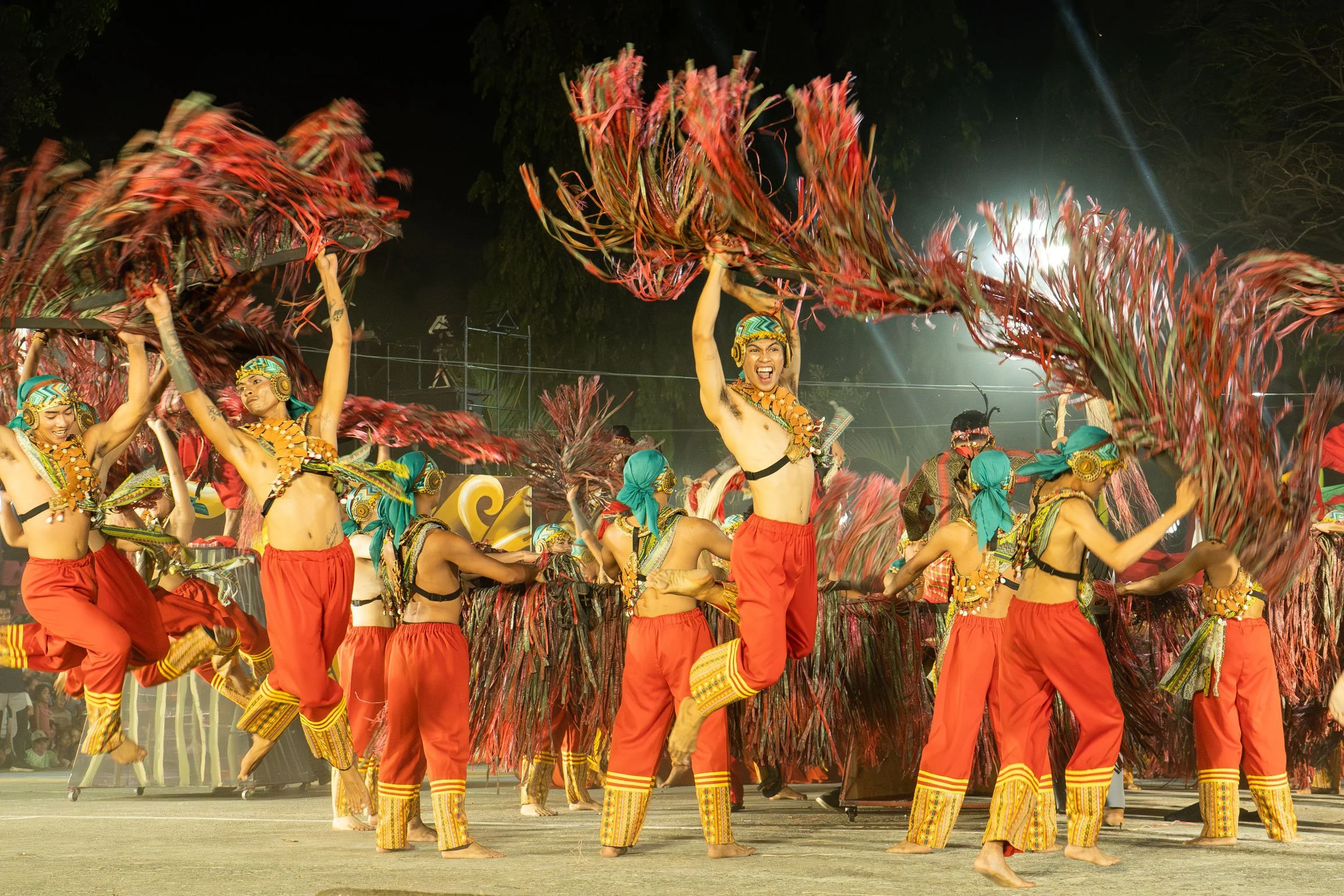
The energy kept building from there. A line of dancers leapt with fire-colored fringe props raised overhead, several of them catching air at once.
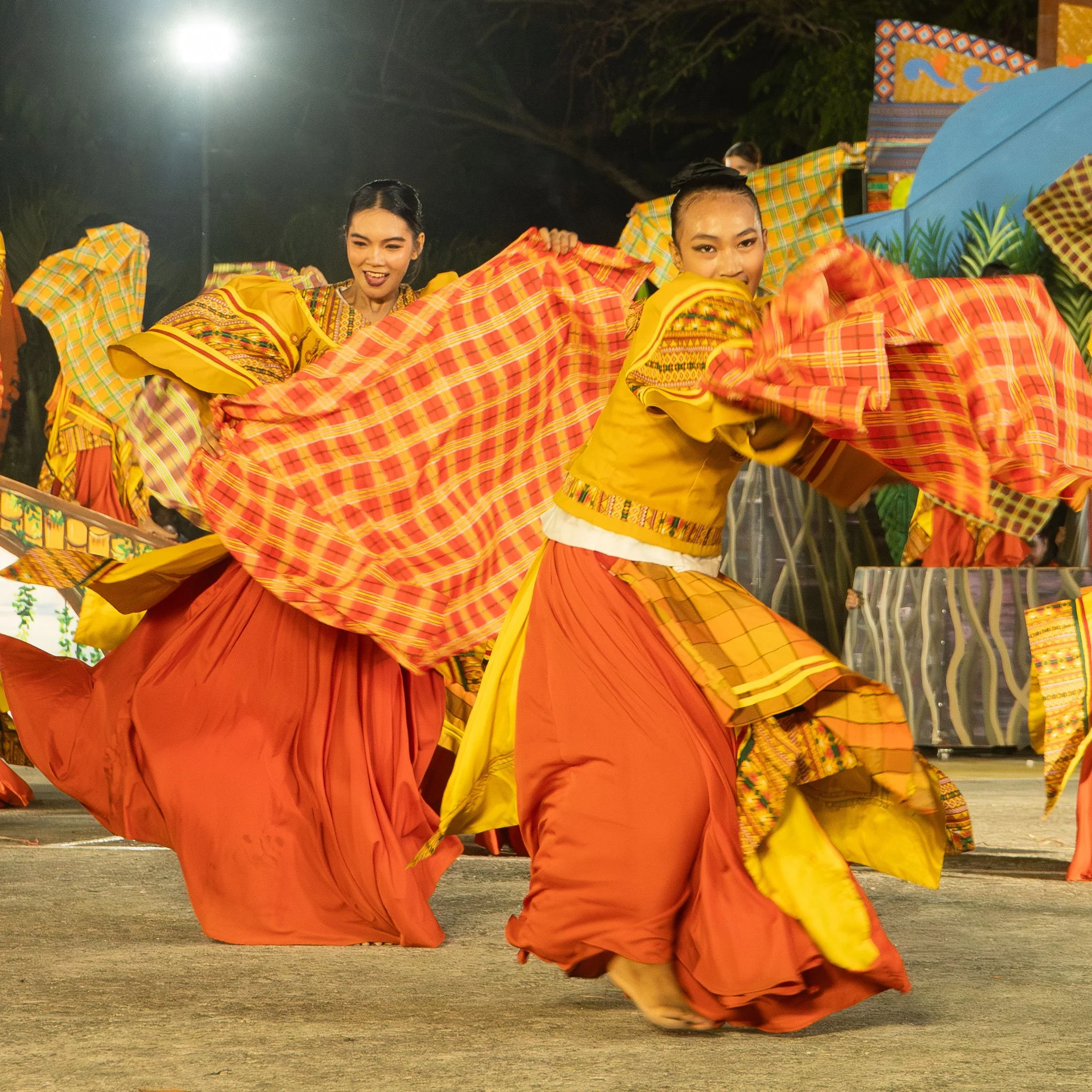
A few groups over, two dancers spun through orange and yellow checkered fabric, fully airborne mid-turn. It was the kind of shot where you can almost hear the music slow down just for them.
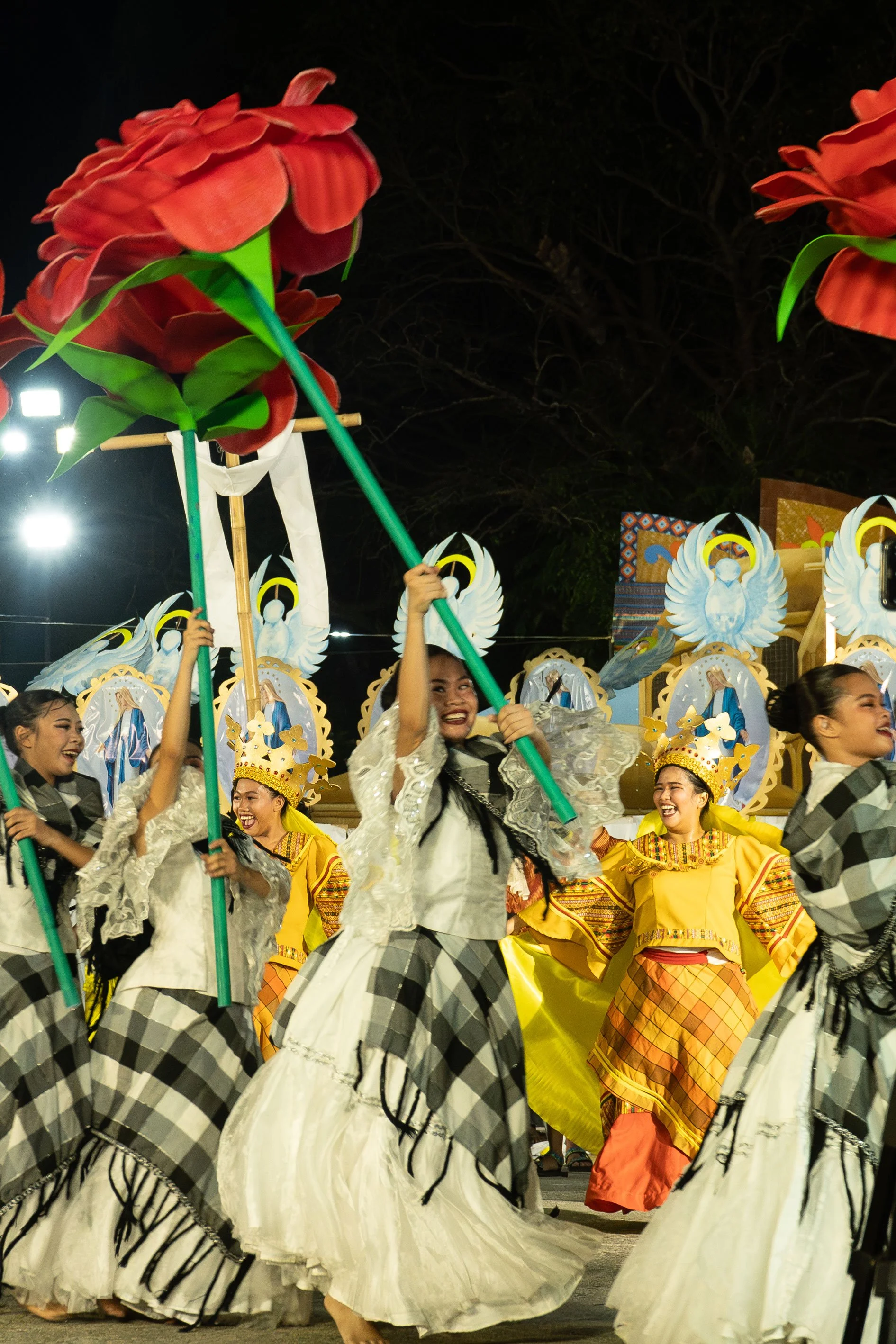
And then, young women carried oversized red rose props on long poles, dancers in black-and-white checkered skirts and gold crowns moving in formation. This one belonged to the Christianization chapter of the story, the arrival of the Augustinian friars and the faith that took root in Oton starting in 1572. Roses aren't a random flourish here. Paired with the formality of the costuming, it reads as reverence more than performance.
As the night went on, the individual "chapters" mattered less than the cumulative effect: barangay after barangay, all in motion, all telling the same seven-hundred-year story from a slightly different angle.
If you're picturing a quick, tidy performance, come ready for something bigger than that. Katagman is loud, long, and communal in a way that rewards patience. The dance-drama competition itself runs for hours, one team following the next, performing in the amphitheater at Oton Town Plaza. So as a spectator you're packed in alongside locals, many of whom have friends or family performing. It's less "audience watching show" and more "town watching itself." Expect crowds, expect noise, and expect the night to run later than scheduled.
Oton sits about 10 kilometers south of Iloilo City — a short drive, easily done as a day trip if you're based there for other festivals in the region. Katagman runs as a week-long celebration starting in the last week of April and closing on May 3, Oton's Foundation Day. The dance-drama competition is the headline event. But the week also includes a street dancing competition, a fun run, an agri-fair and garden show, and a motorboat race along the Batiano River — worth knowing about if you're staying longer than one night.
Right now, that gold mask is sitting behind glass in Manila, quiet and still, the way museum pieces are supposed to be. But once a year, back in the town it came from, its story doesn't sit still at all. It gets performed — sung, drummed, danced, built out of rented fabric and welded barrels and rose props on poles — by the people who are still, in some sense, its descendants. If the mask is Oton's memory, Katagman is proof the town hasn't let it go quiet.