
As a child growing up in 1960s Iloilo, my mom would watch my grandmother do house chores wearing a patadyong. Traditionally a tube-like wraparound skirt, the garment can also be worn as a dress, which is how my grandma wore it. The fabric was a handwoven textile made in the Visayas region, using a technique called hablon. And now, more than 60 years later, I’m here in my grandparents’ city, on the land my mom grew up on, seeking out the story behind this traditional art form.
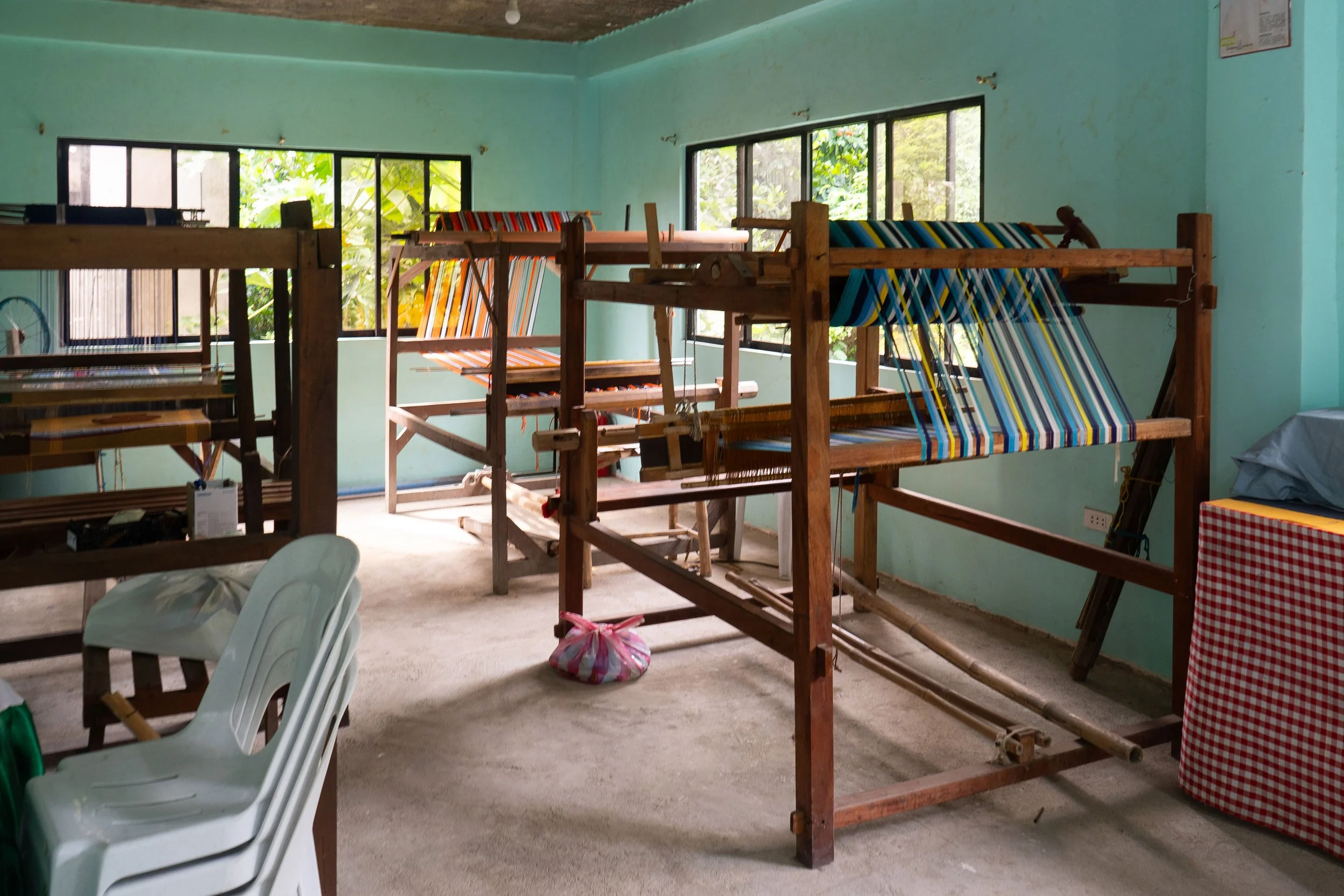
One afternoon, my family and I took a drive that led us through provincial back roads, with cows and goats grazing in the rice fields. We visited the Salngan Livelihood Multipurpose Cooperative in Barangay Salngan, Oton. This women-led weaving group has been keeping the hablon tradition alive here for years, and giving the women in this community a steady source of income along the way.
How Hablon Is Made
Outside the building entrance, I stopped in front of a poster on the wall describing the entire process, start to finish.
Planning — threads are chosen and arranged by color and pattern before anything touches the loom.
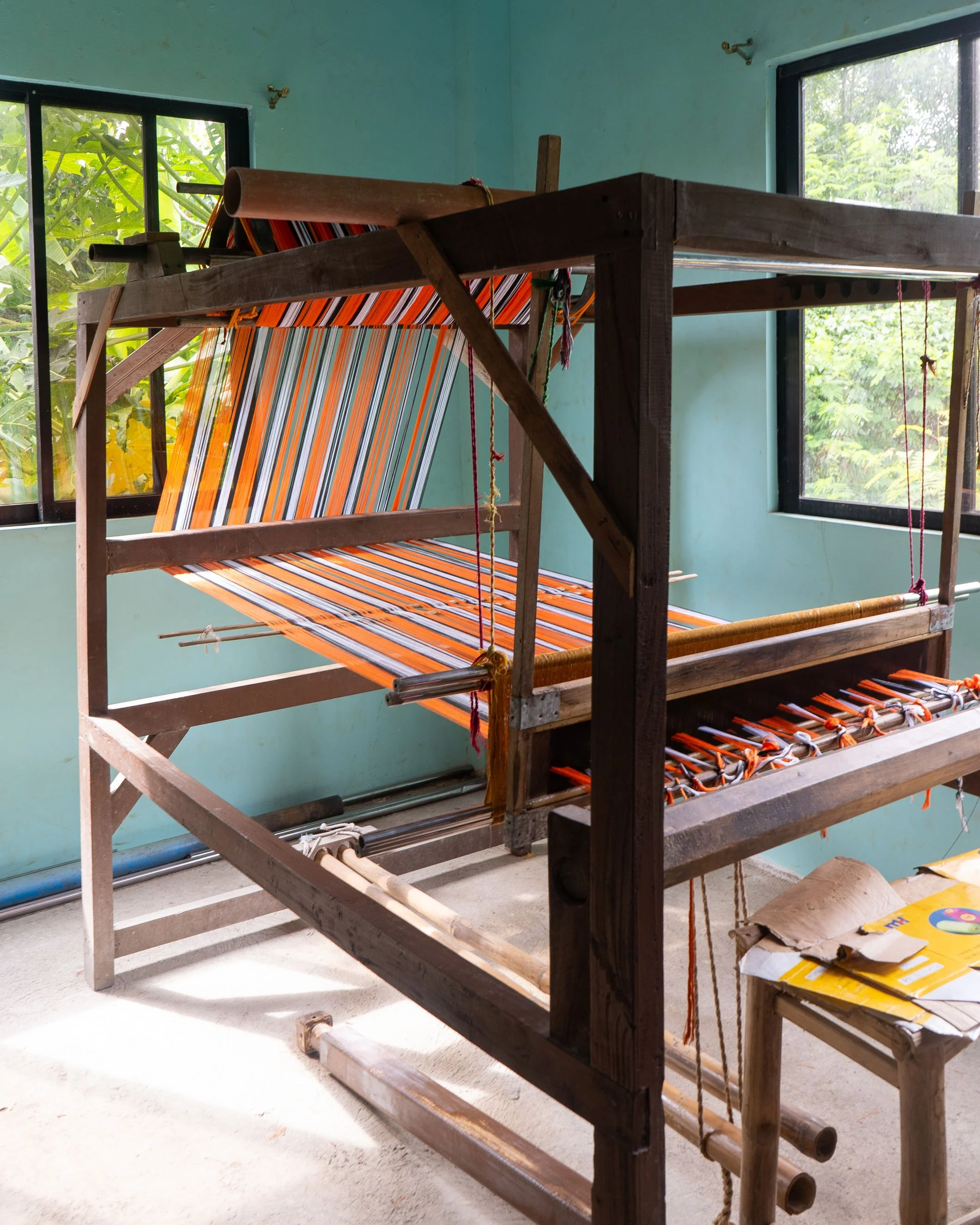
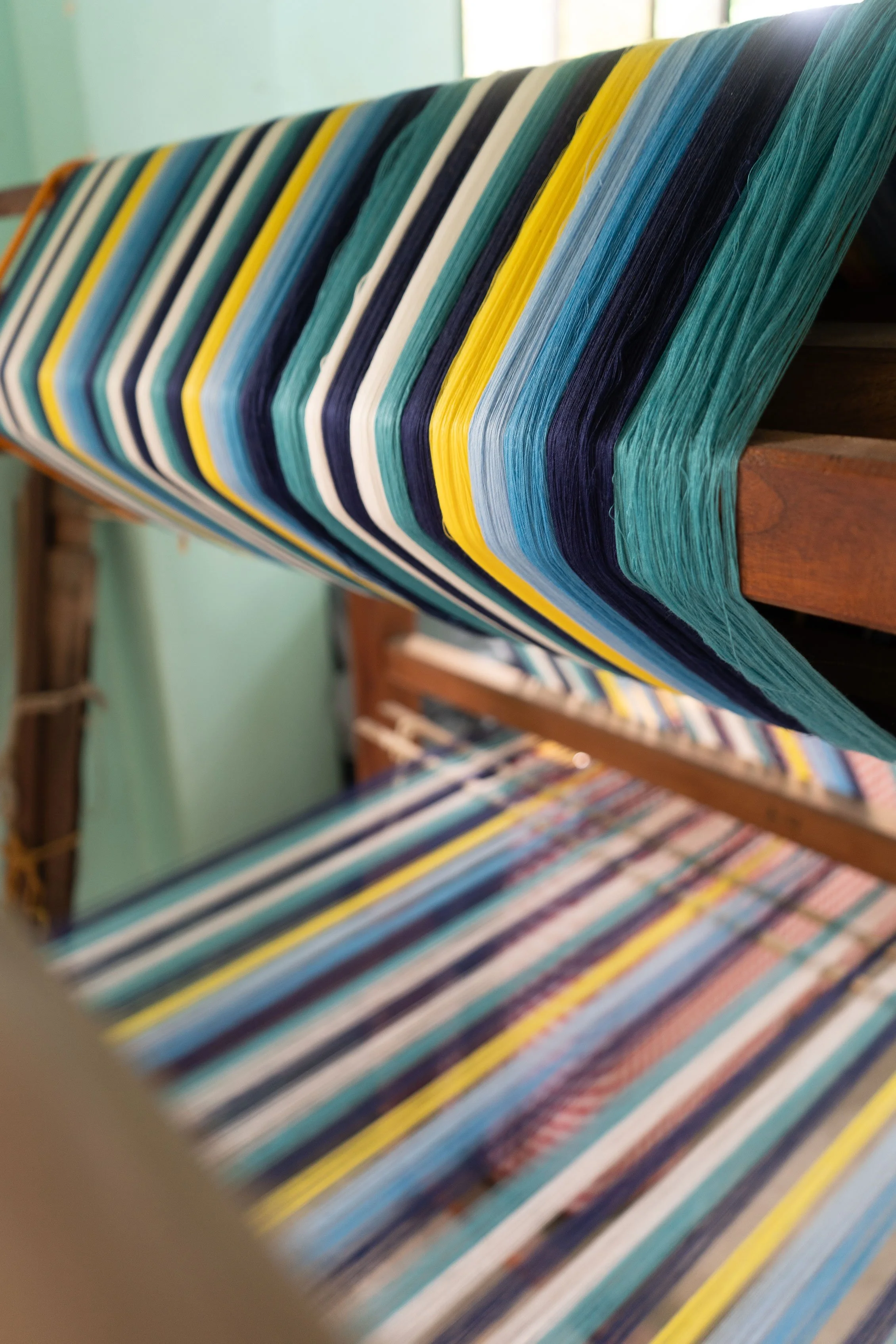
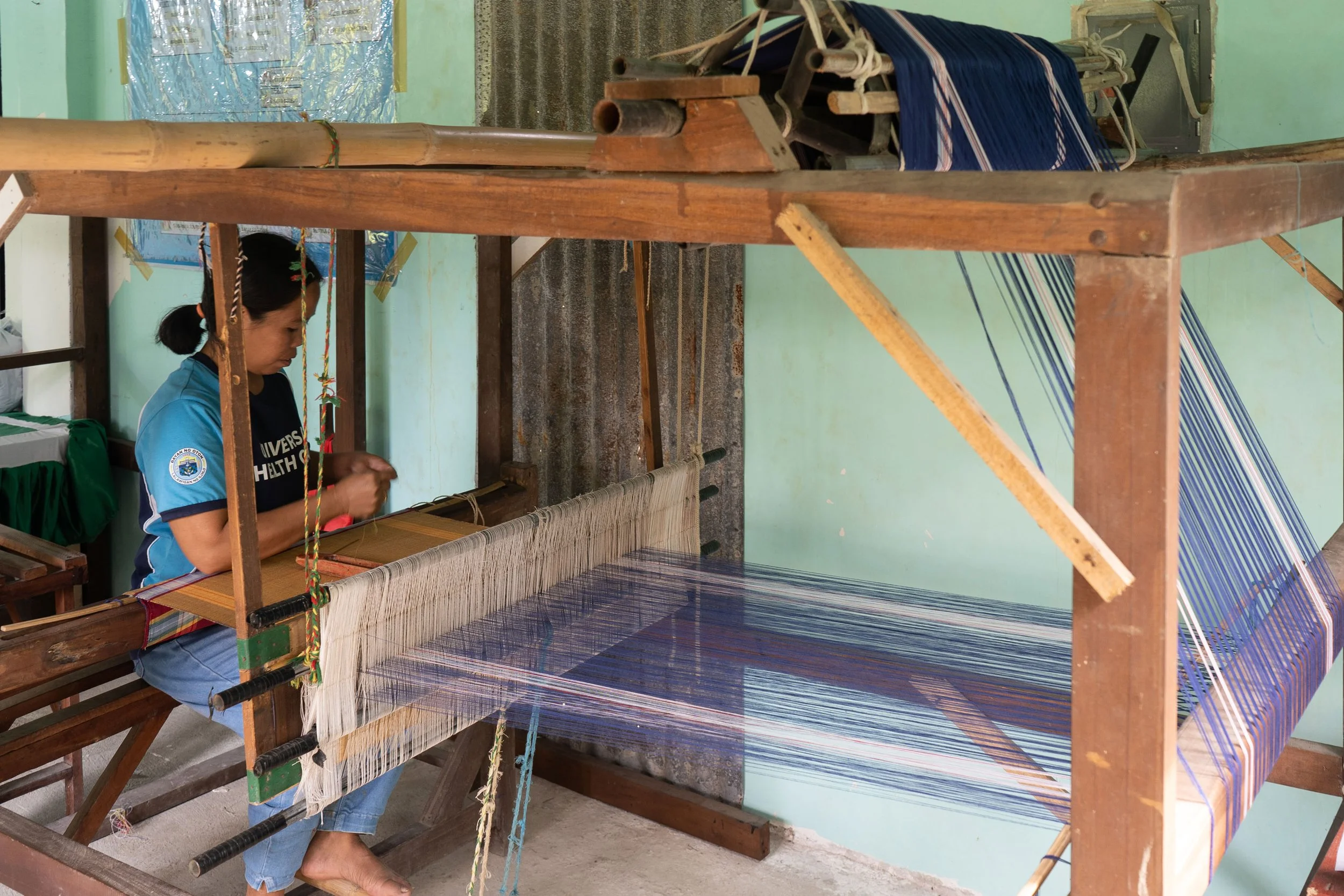
Warping (Sab-ong) — threads are grouped and rolled along bamboo pegs, counted by hand for the exact length, width, and design.
Beaming (Likis) — the warp threads are rolled onto the weaver's beam, a bamboo cylinder at the back of the loom.
Hedding (Sulod sa Binting) — each thread is passed through the openings of the heddle.
Reeding (Sulod sa Sulud) — threads are hooked one by one through the metal reed using a bamboo hook.
Tie-In (Iligot sa Baston) — the thread ends are tied onto the wooden cloth roll at the base of the loom.
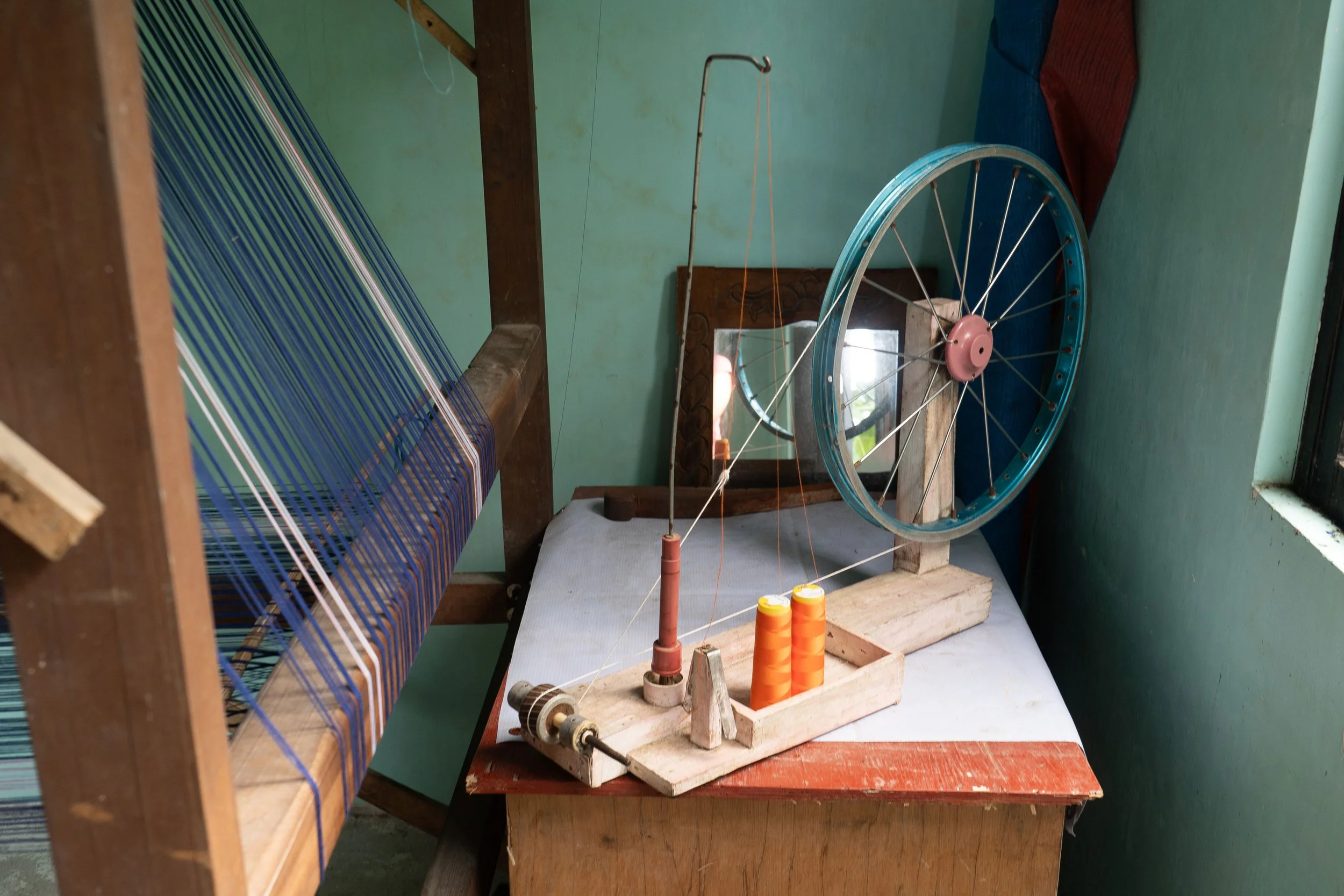
Spooling (Pangalinyas) — weft thread gets wound onto a shuttle (lanzadera) using a traditional spooling wheel.
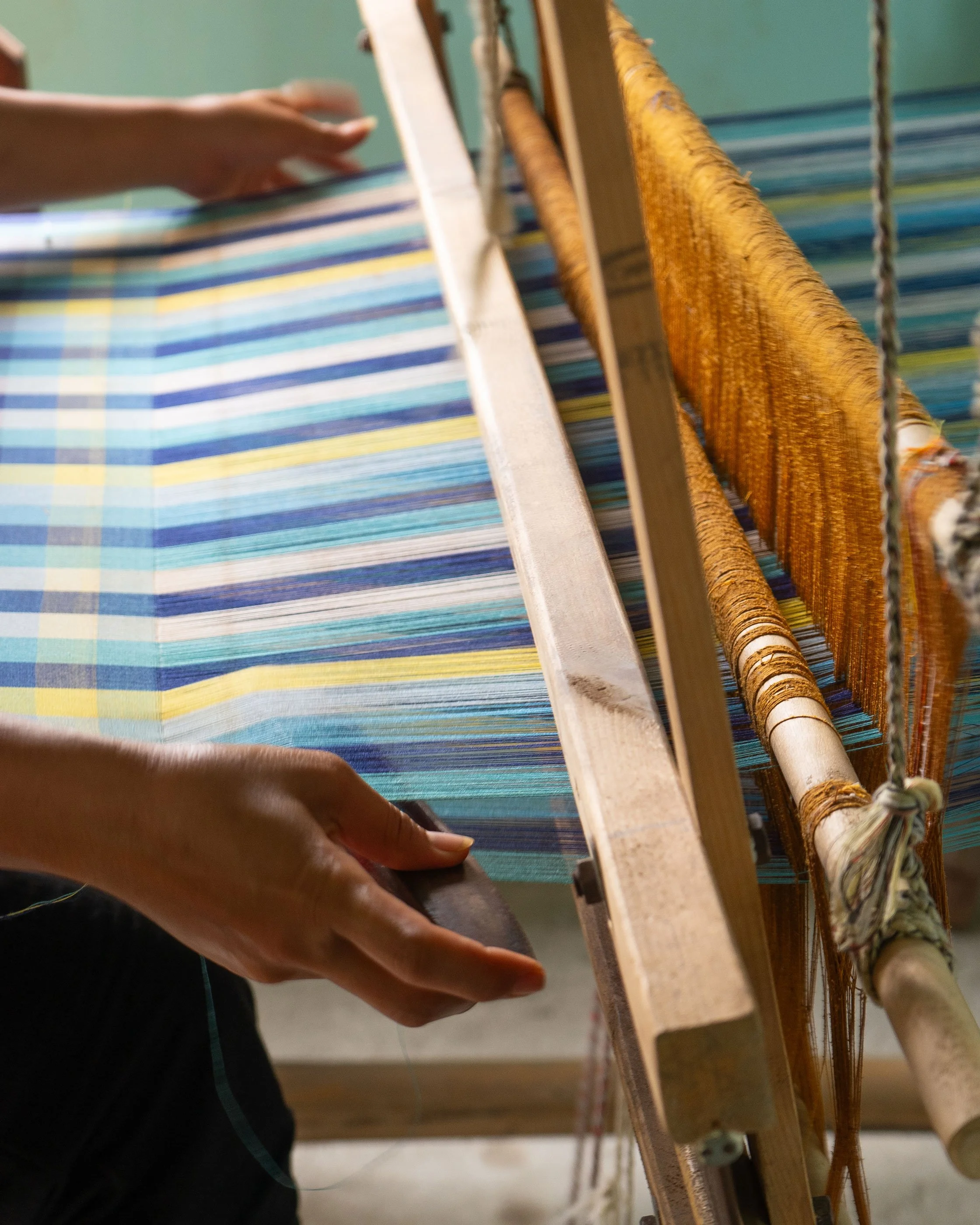
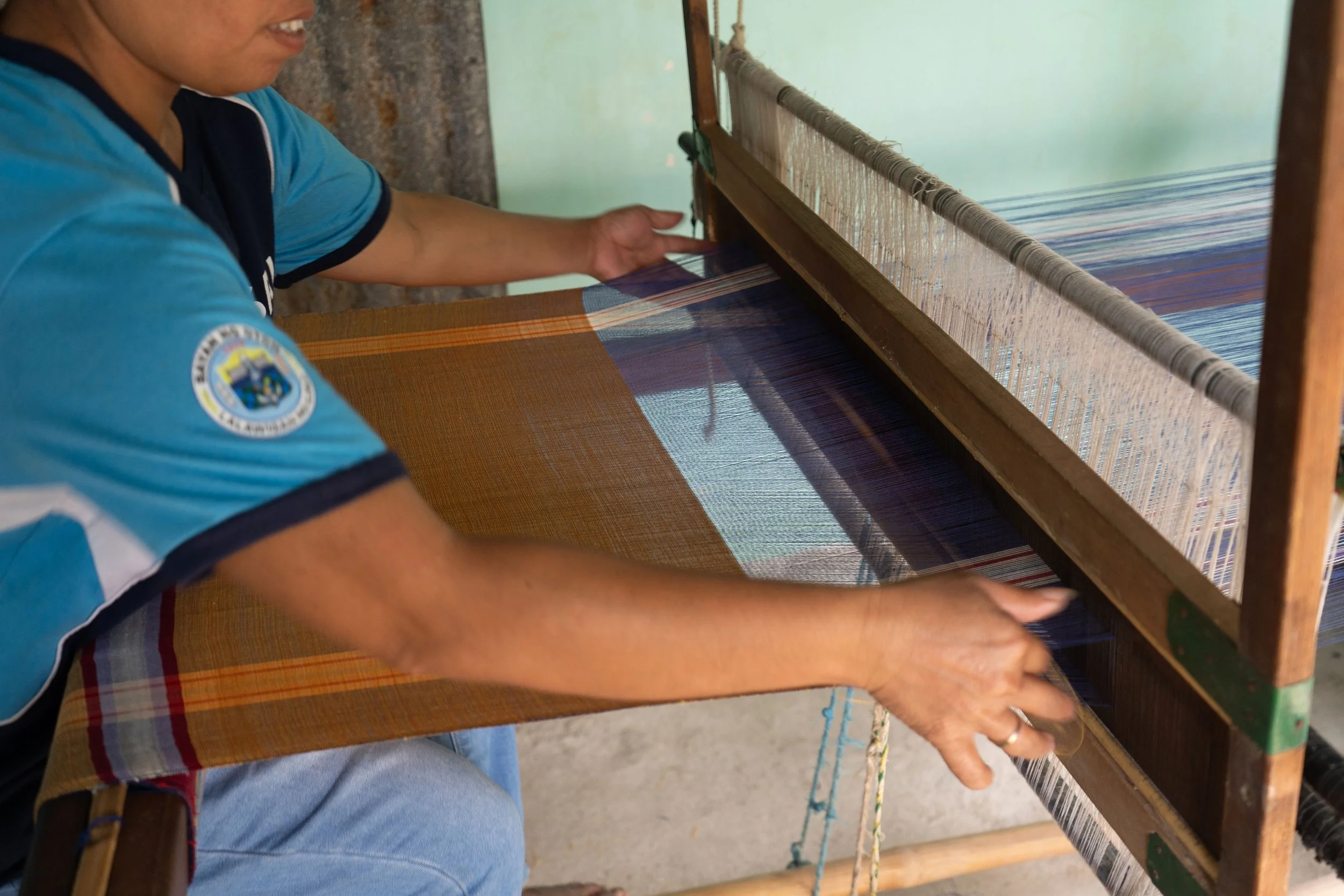
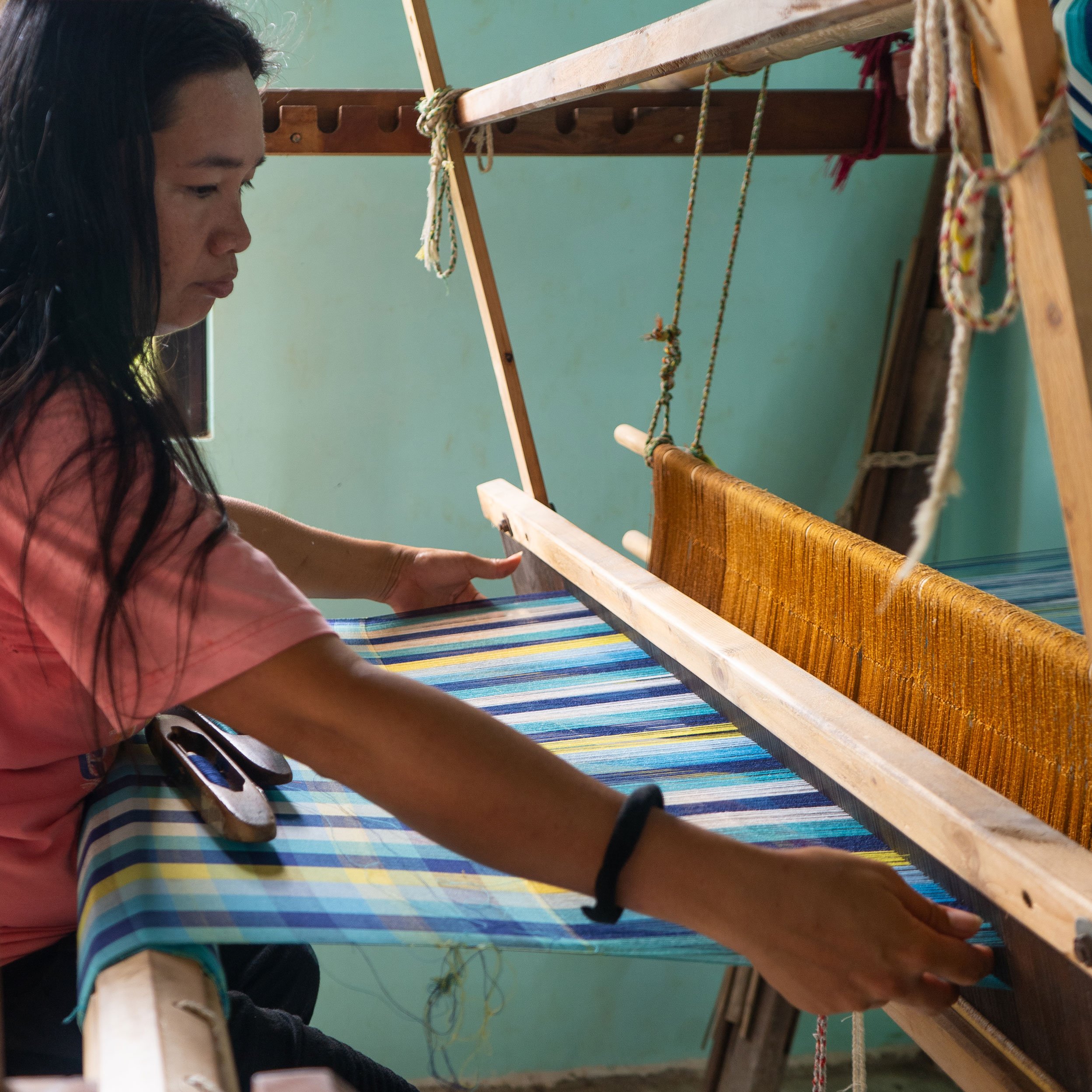
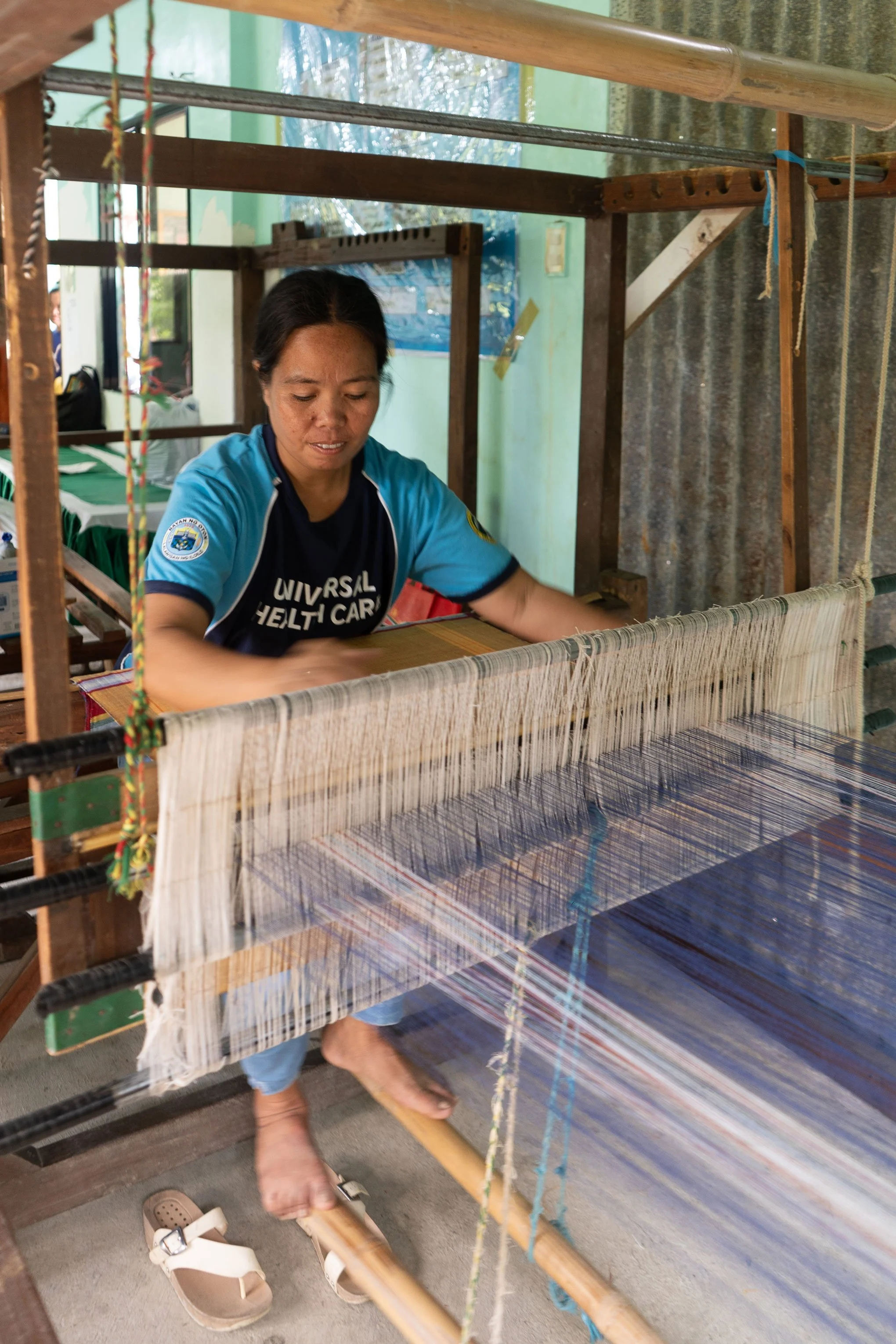
Weaving (Paghabol) — the weaver pedals to open the threads, the shuttle carries the weft across, and the reed pushes it into place. Repeat, for hours.
Reading it laid out step by step made what I was about to watch — and attempt — feel a lot less simple.
Meet the Weavers
I got to talk with two of the women working that day, both generous enough to pause their weaving and answer my (very amateur) questions.
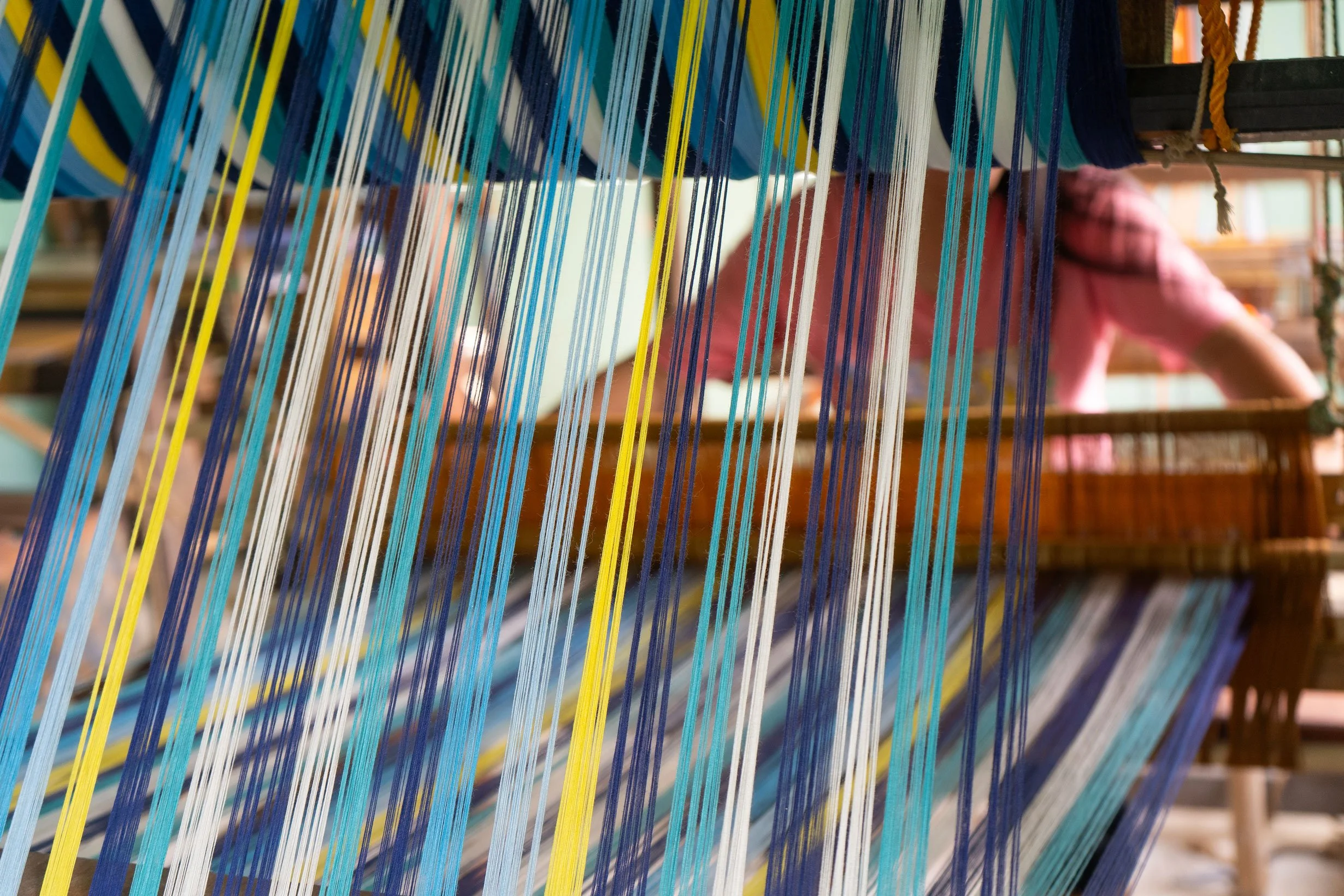
One has been weaving for six years. She was partway through a shawl in a blue, white, and green check. The kind of pattern that looks simple until you realize every color shift means another calculation. On average, it takes about three hours to weave a single meter. She told me she finds the process relaxing. I can imagine partaking in this kind of craft calms the mind while the body works almost on autopilot.
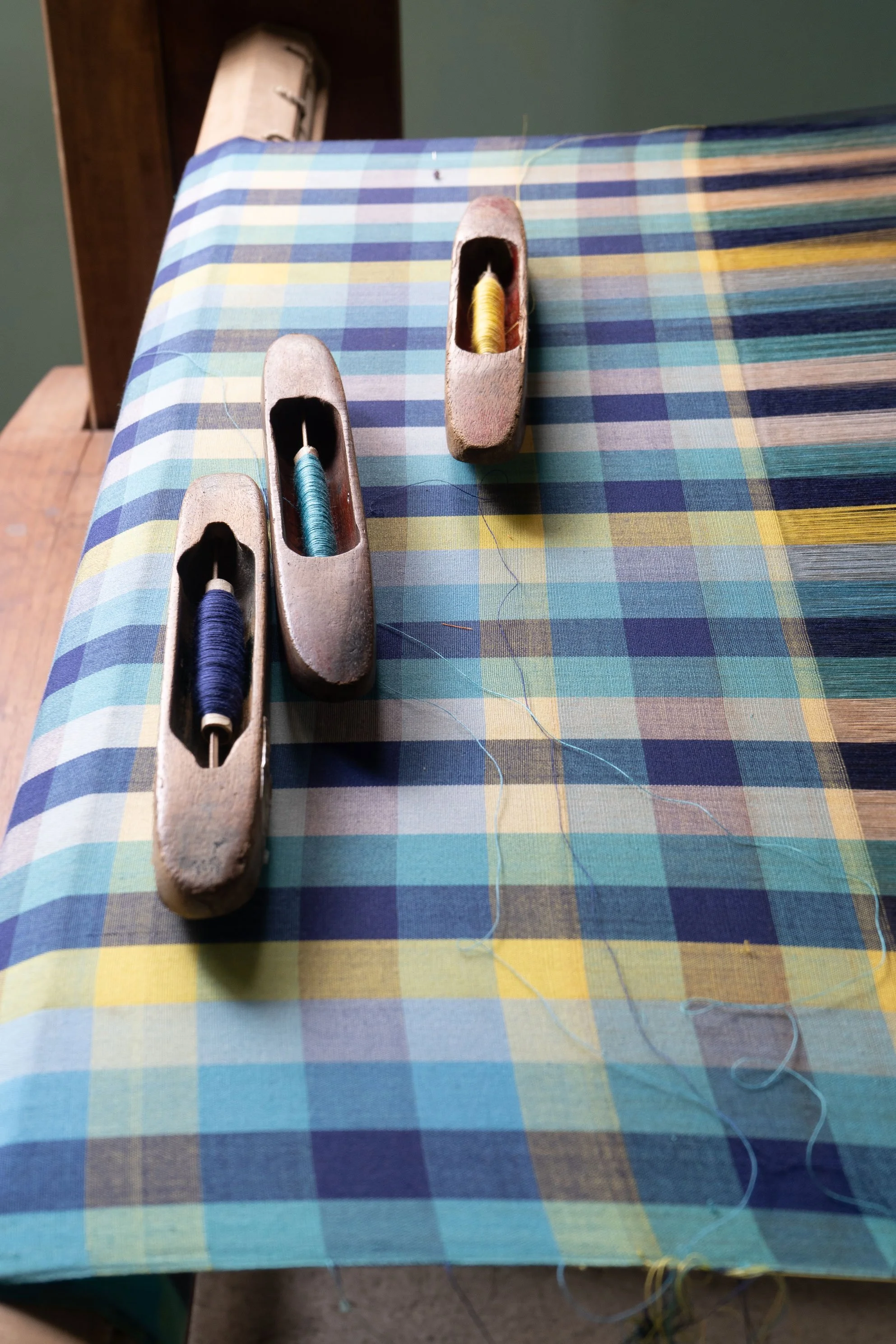
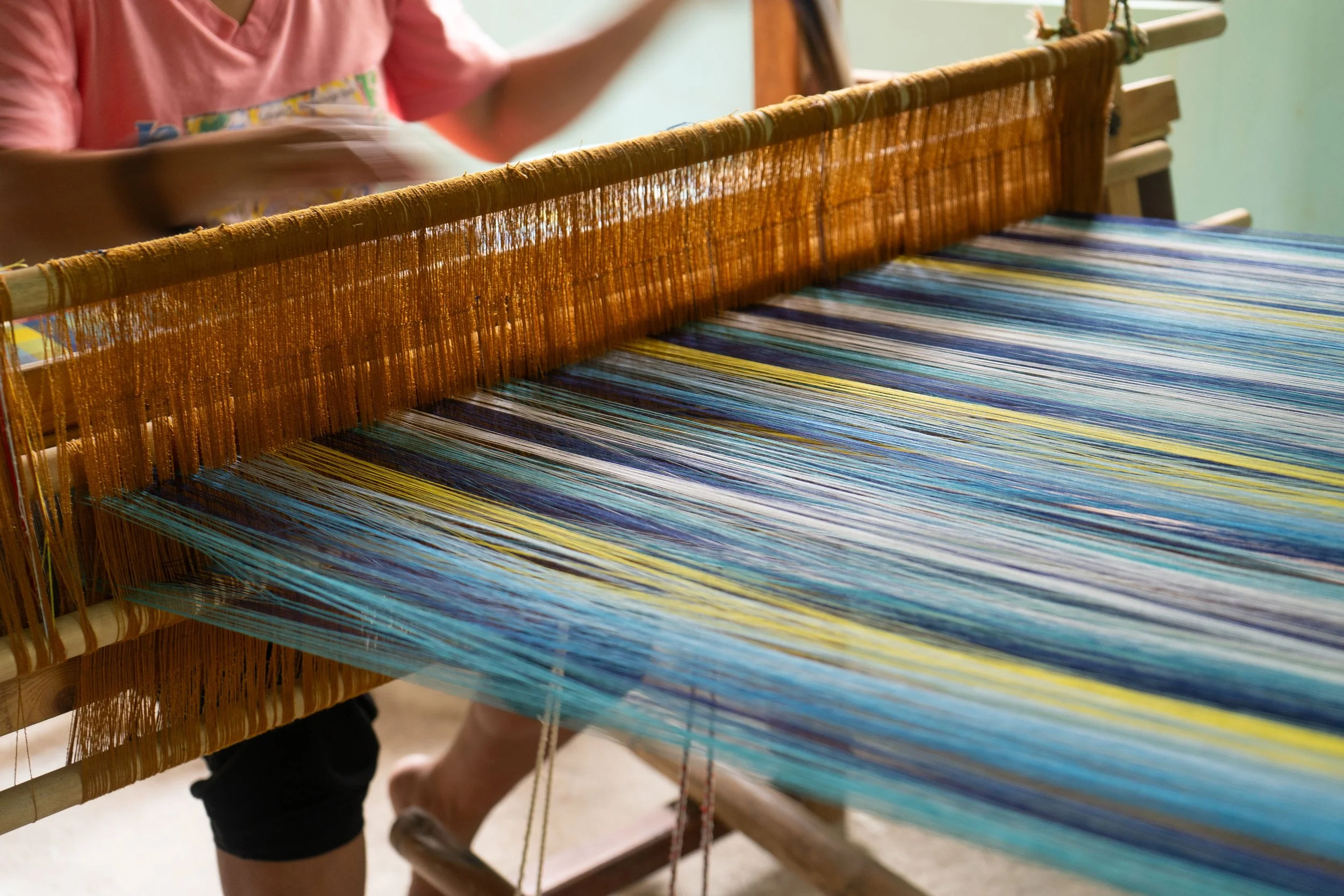
A few looms down, a weaver of three years was working on a bandana in orange and blue. Hers moves faster — roughly one hour to complete. It amazed me to watch her work with such precision. She’d carefully place a spool of weft thread into the lanzadera or skillfully keep everything from tangling, like it was effortless.
Trying It Myself
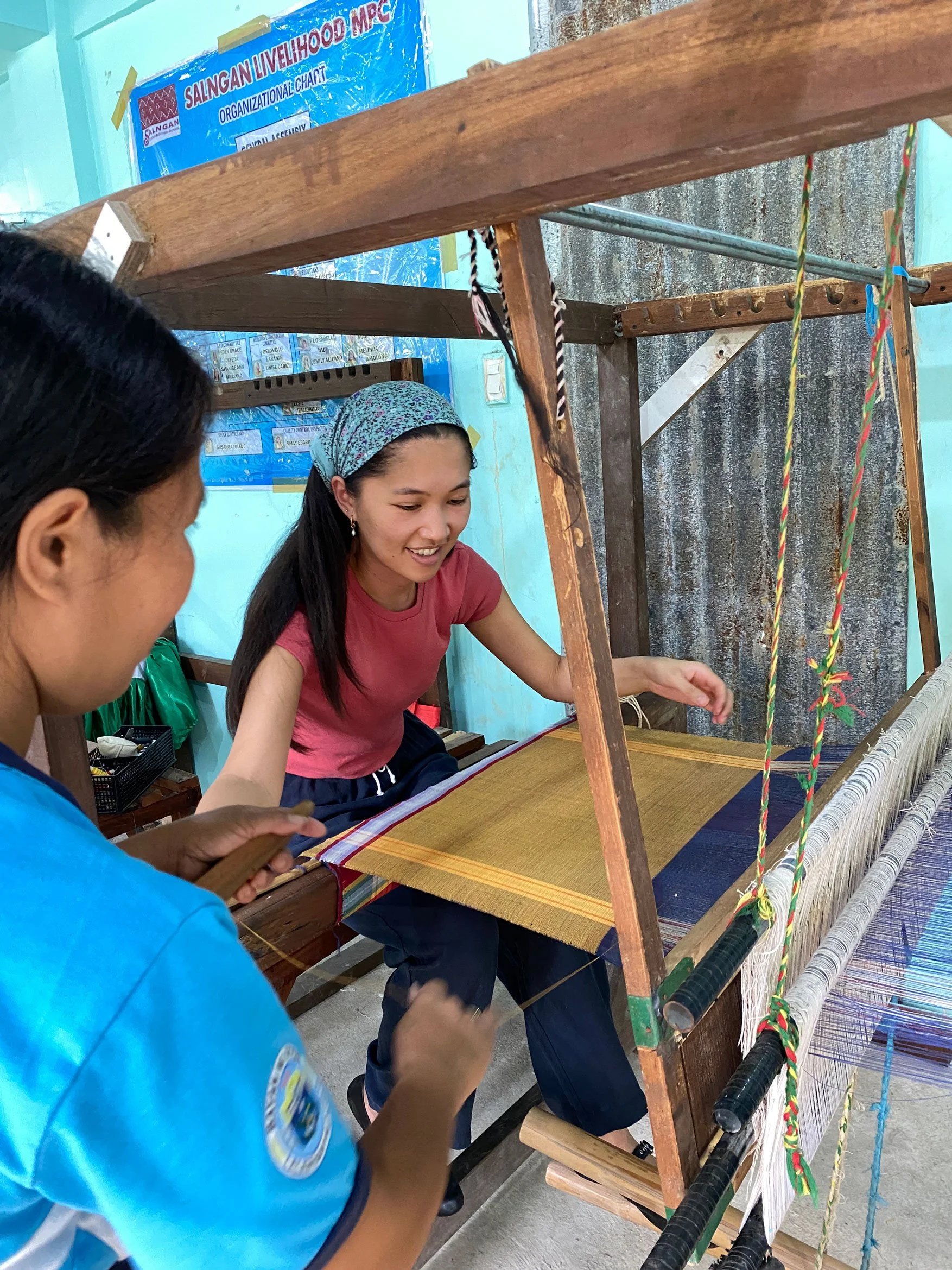
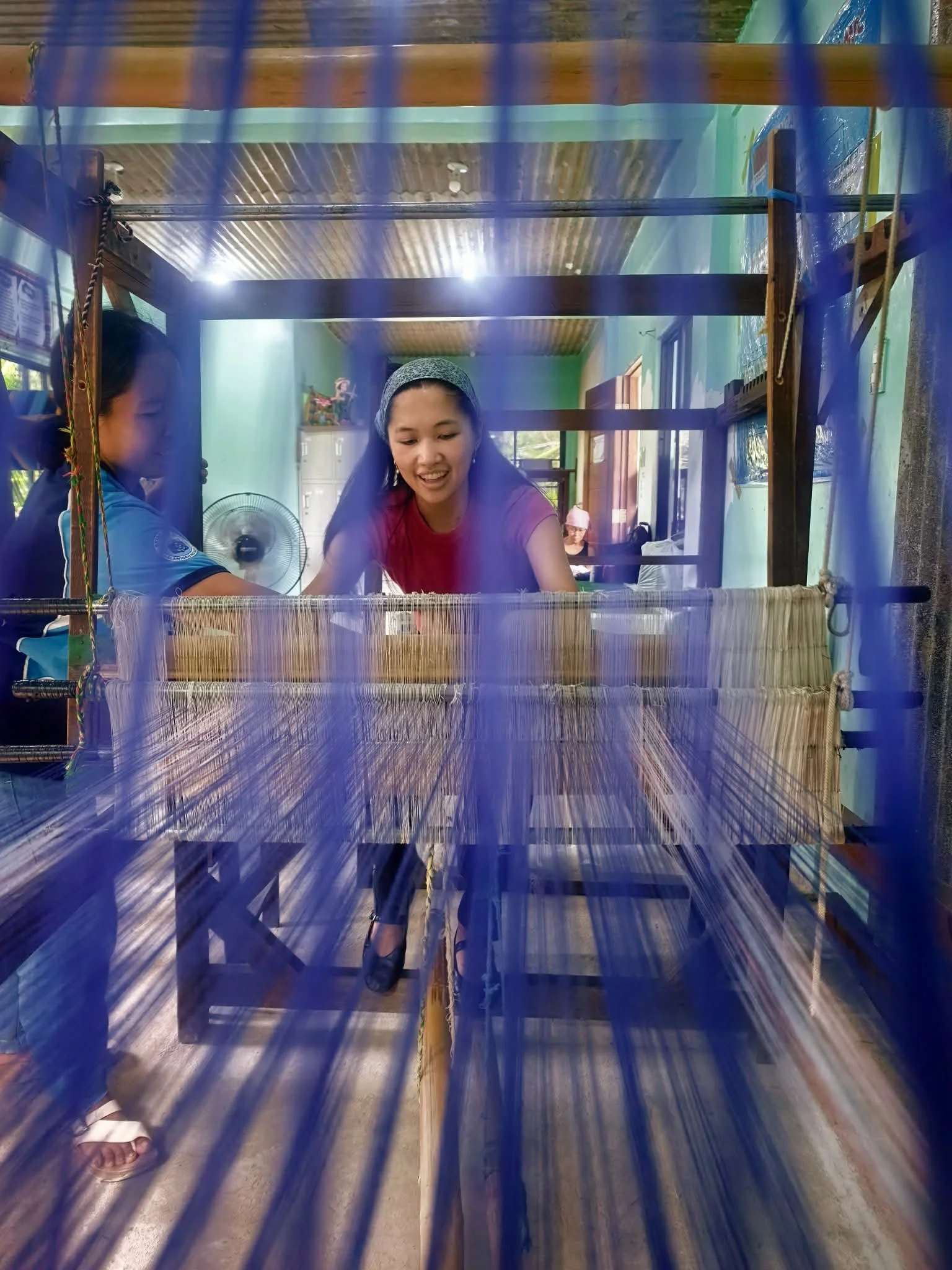
One of the weavers asked if I wanted to try — and I simply couldn’t pass it up. I sat on the wooden bench and was told to place my feet on the bamboo pedals. She handed me the lanzadera and pointed to the opening on one side of the loom where I’d pass it through to the other. I kind of had to throw it with a bit of force to send it all the way across, or else it stopped somewhere in the middle of the loom. Which happened to me over and over again. And while I’m focusing on that, I had to make sure to alternate stepping on the pedal to open the threads. It was a bit of a clumsy process, but fun nonetheless; I definitely had to get it wrong before getting it even a little right!
Here's the part I didn't expect: the looms are built for a shorter frame than mine. My legs are longer than most of the women who use these machines day to day. And I could not, for the life of me, get my pedaling rhythm right. It was a small, funny moment — but it landed on something bigger I've been sitting with since I moved to the Philippines. Being told, in ways big and small, that I don't quite fit the mold of what a "Filipina" is supposed to look like. Even here, in a room built by and for Filipina women, my body didn't fit the machine. But that didn’t stop the weavers from encouraging me with a smile and a laugh.
A Cooperative With a Notable Track Record
This isn't just a local operation working in obscurity. The Salngan cooperative was once commissioned to weave a contemporary hablon blouse for the winner of Miss Universe Philippines in 2020, Rabiya Mateo.
During our tour, my uncle (who is a painter active in the local art community here in Iloilo) shared with me that this cooperative supplies some of the patadyong fabric used in the parols that go up around Iloilo City during Christmas time. I haven't independently verified the details. But if it's true, it means some of the lanterns lighting up the city's streets during the holidays started on a loom in this very room.
What They Make
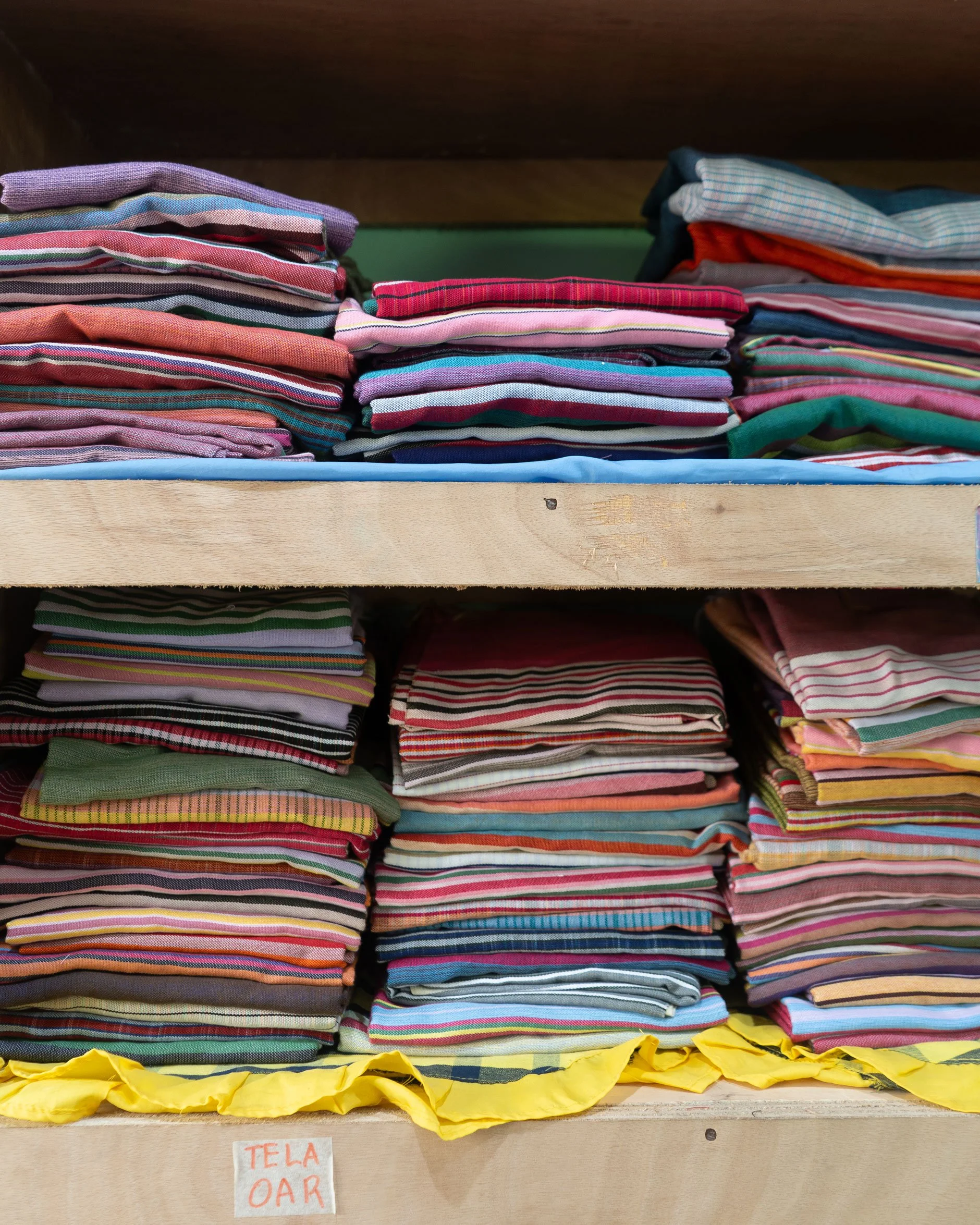
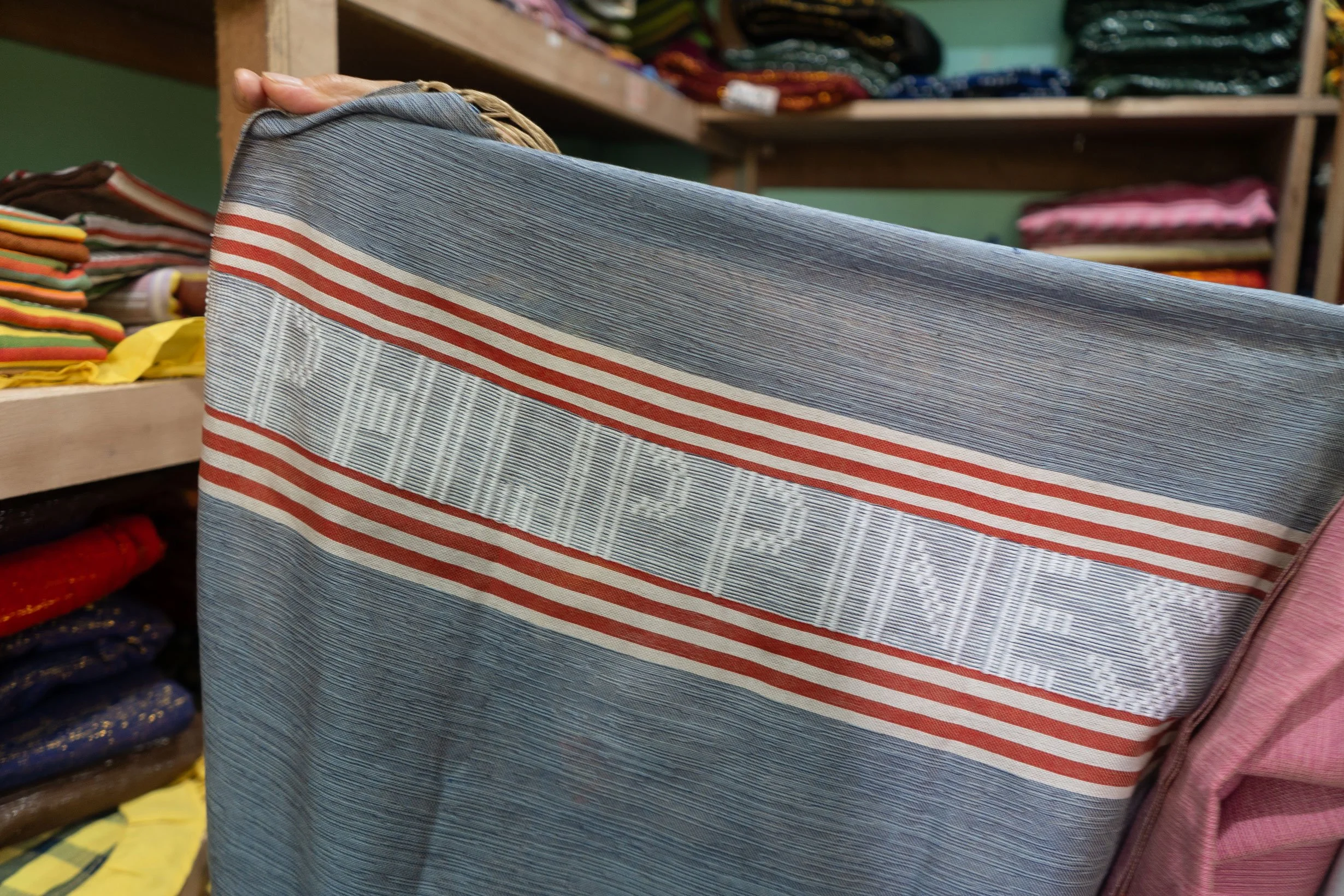
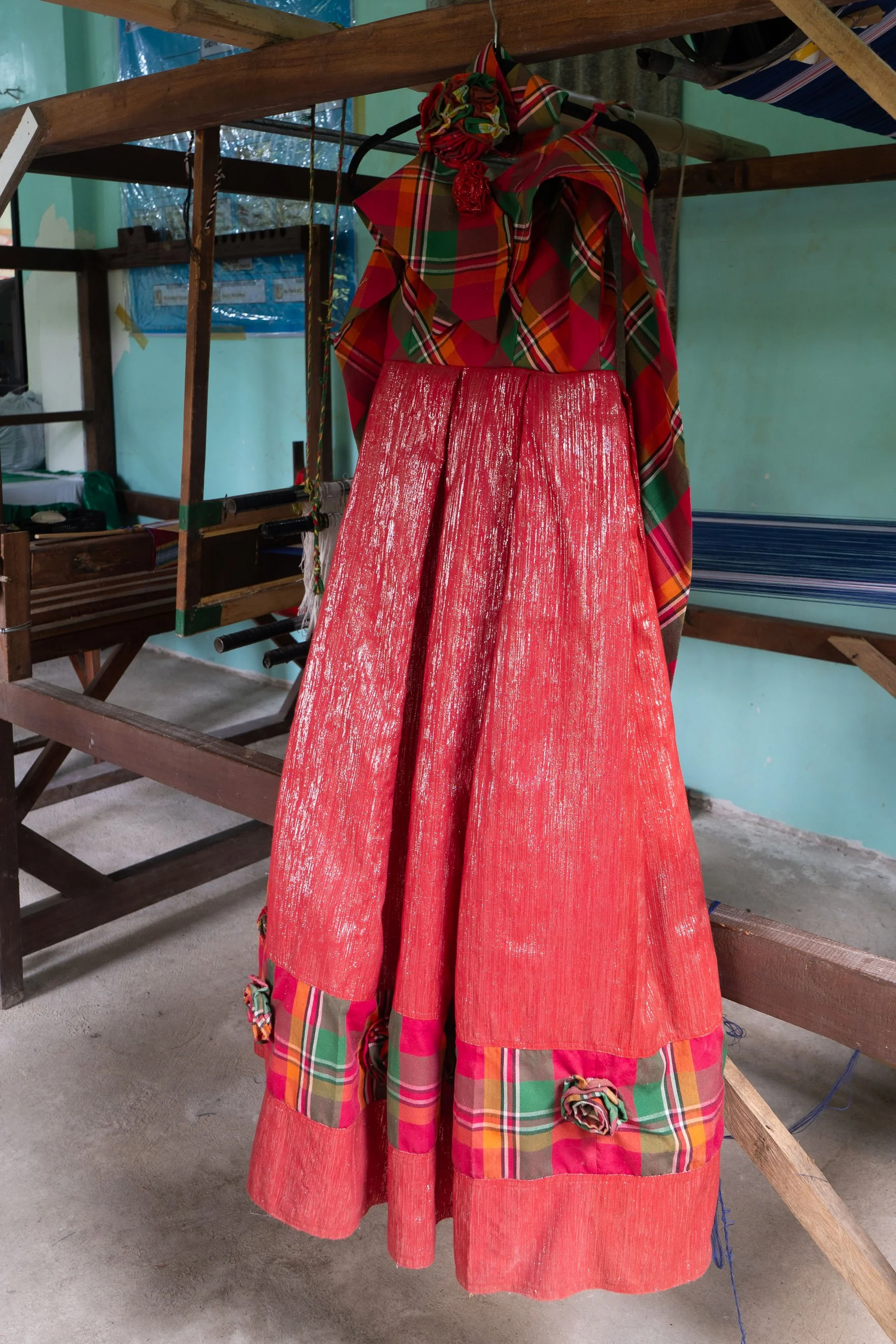
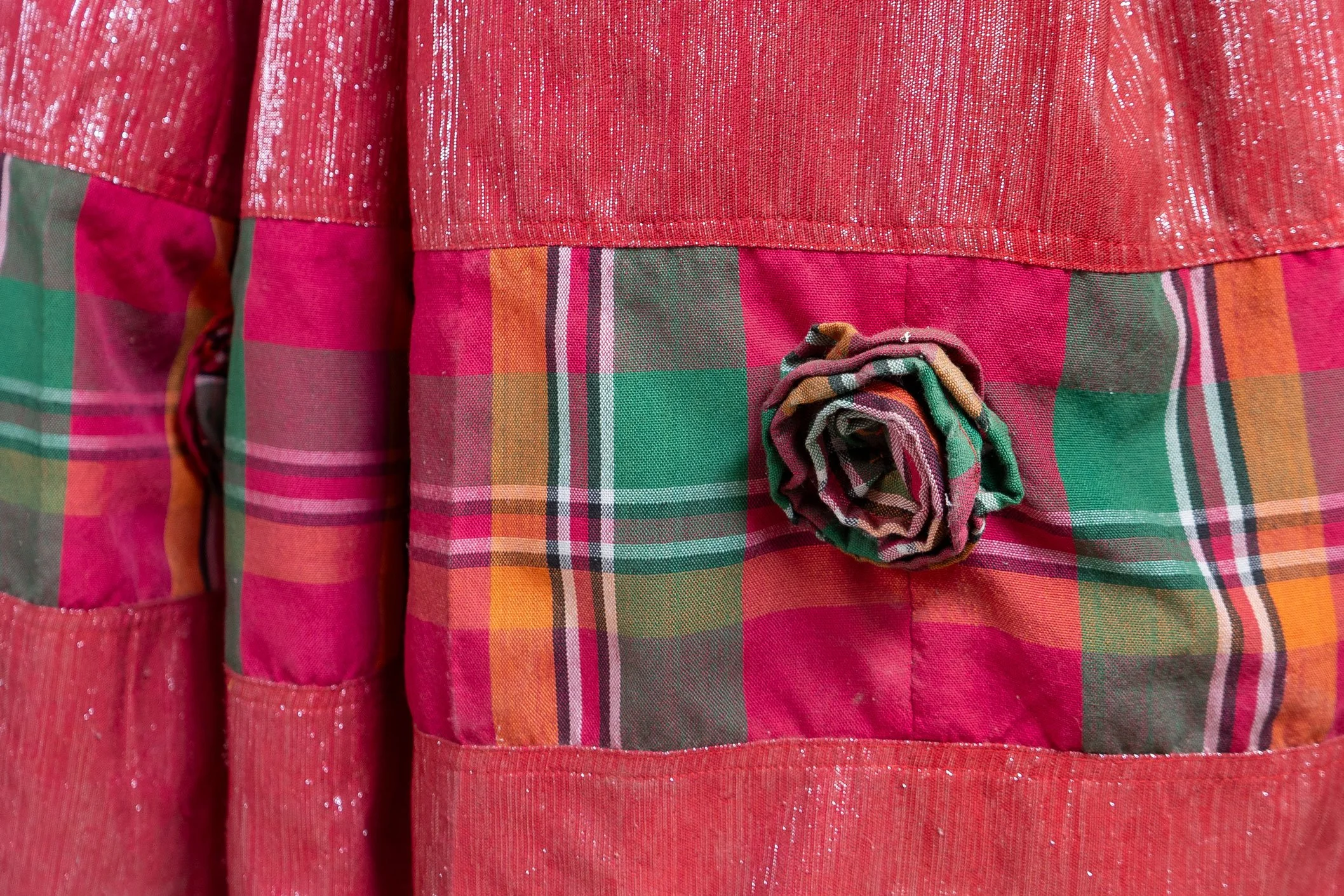
Past the looms, a back room holds shelves of finished work: shawls, table runners, bandanas, placemats. Solid colors, plaids, a few pieces using metallic thread. A table runner edged with "PHILIPPINES" woven right into the border. It's the kind of room that makes the hours-per-meter math from earlier feel very real. Also on a shelf nearby was a hablon dress made by the weavers, a bold red with metallic thread that sparkled and delicate plaid florals.
Closing
Spending an afternoon with these kind and talented women felt genuinely special. Because of their willingness to share their process and to answer my questions, I somehow felt more connected, even in a small way, to my family history. Now when I think of my grandmother and what life must have been like in 1960s Iloilo, I can imagine the dress she wore. And how it must have felt to move through the world in a garment so carefully crafted, in bright colors and bold patterns that tell a story of their own.